Summary
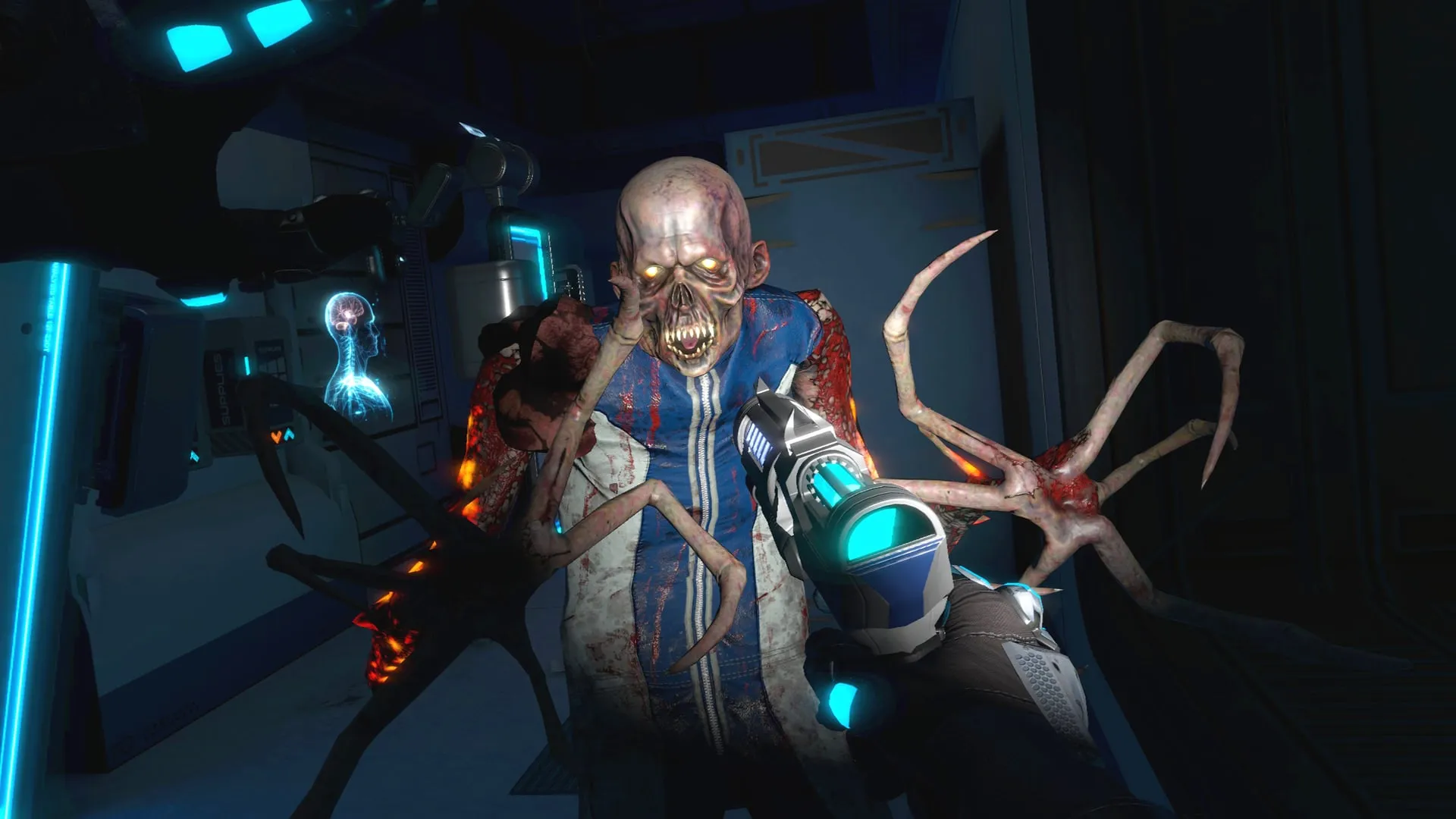
Memoreum is a sci-fi action horror campaign that Patient 8 Games released on Meta Quest 2 and 3 in October 2025, after four years in development. By standalone VR standards it’s a big game: 119 scenes across 17 connected areas, fifteen enemy types and a save system built for long runs.
I joined as a contractor in 2022 and was quickly promoted to lead developer. Until the final year of production I was the only programmer on the team apart from audio, and I wrote 77% of the code in the shipped game, measured line by line.
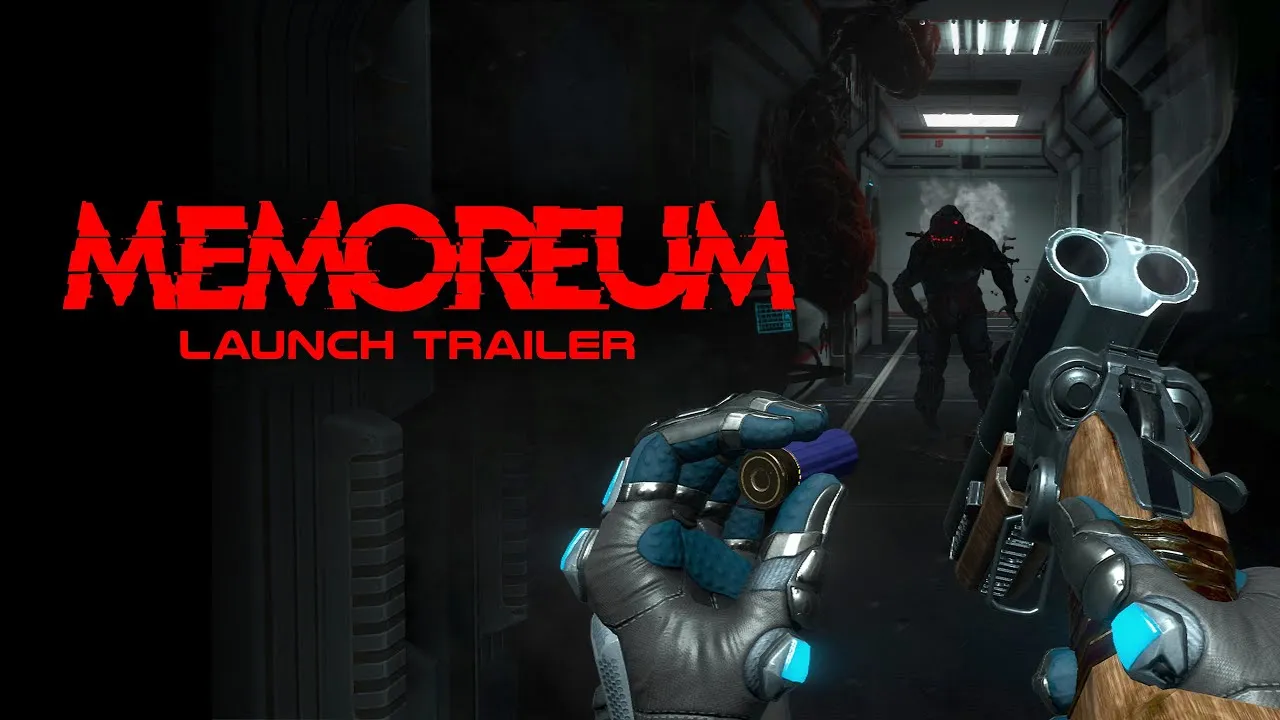
Launch trailer. Plays from YouTube.
Leading the development
On a team of fifteen, being lead developer meant being the single point of contact for everything technical. I set the architecture, planned the work, and sat down with art and design to work out what a headset could actually handle before anyone built it. Every build that left the studio went through me: test builds, review builds, the builds used to record trailers, the release itself and every patch after it, through Meta’s submission process each time.
A lot of the role was translation, in both directions. Scripted sequences are written by people imagining a player, and a real player in a headset doesn’t always cooperate. They don’t know exactly where to stand, which way to look or when to hide. I spent a fair amount of time making sure those moments held up in a player’s hands, keeping what the writing needed while giving the player more room to get there.
In the final year the team expanded, and towards release we had the usual hard conversations about what could and couldn’t make it in.
The constraint
A standalone headset is a phone chip worn on the face. It has to hold its frame rate or players feel unwell, and it has a fraction of the memory a PC game can count on. On Memoreum, memory was the constraint that shaped everything else.
Every level is its own scene, and each one loads through an empty transition scene so the previous level, and every asset it was holding, is released completely before the next one arrives. We didn’t stream several areas in at once; on a headset, a short loading screen was the safer trade. The content is split into 37 bundles, one group per area of the facility, so only what the current area needs is ever loaded. Effects like blood, impacts and projectiles come from pools that fill one object per frame rather than all at once, and the ragdolls of dead enemies are frozen so a long fight doesn’t leave dozens of live physics bodies behind. Even with all of that, memory caused problems many times, most of all as memory-leak crashes in 2024. The bundle layout was fragile enough that I ended up writing several thousand lines of editor tooling just to back it up, validate it and repair it.
What I built
Apart from the audio and most of the boss AI, which other programmers handled, the game’s systems went through me: saves, level loading, weapons, VR interaction, animation programming, the enemy AI foundation, progression, the UI and subtitles, the tools and puzzles, and the editor tooling. A few parts are worth describing.
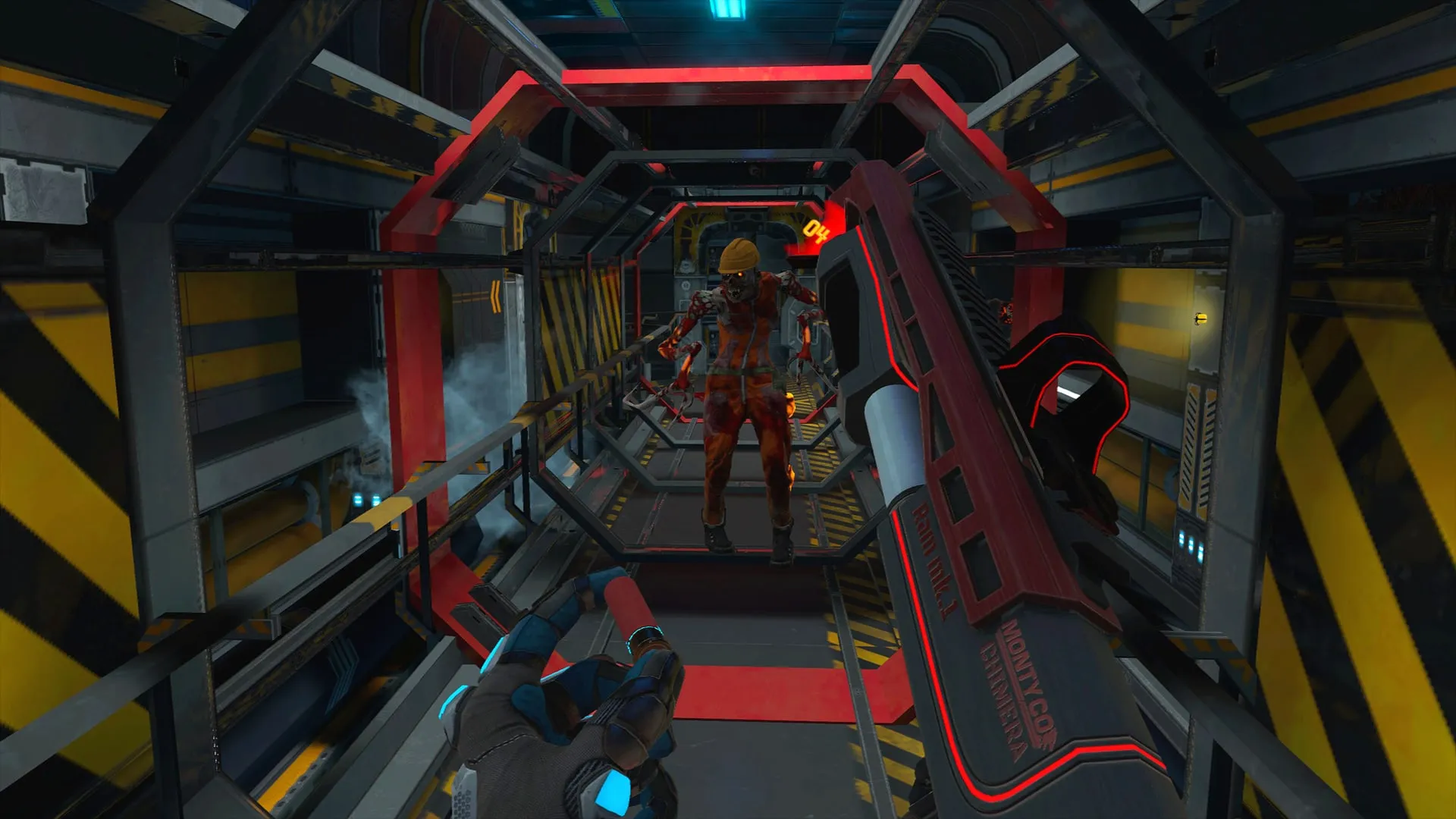
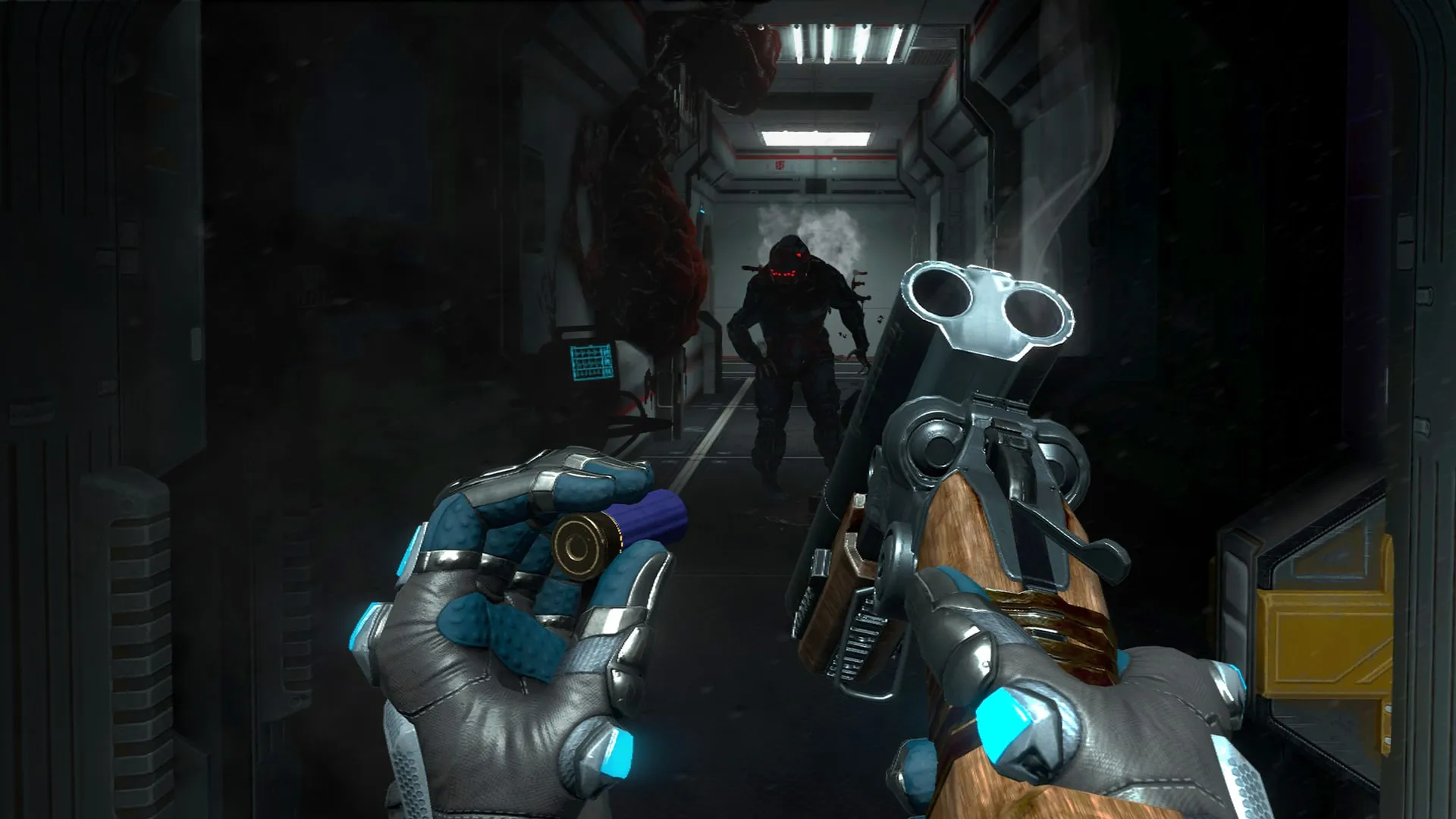
Weapons that feel physical. This was the most creative part of my work on the game. Magazines come out of a pouch on your body and get pushed into the gun by hand. The pump shotgun takes shells one at a time. The double-barrel shotguns break open on a hinge, throw out their spent shells, and close when you swing the barrels back up. Two plasma pistols snap together into a single automatic weapon when you touch them to each other. Weapons that charge up shake in your hands while they build, through small impulses on the gun’s physics body and a pulse on every controller holding it.
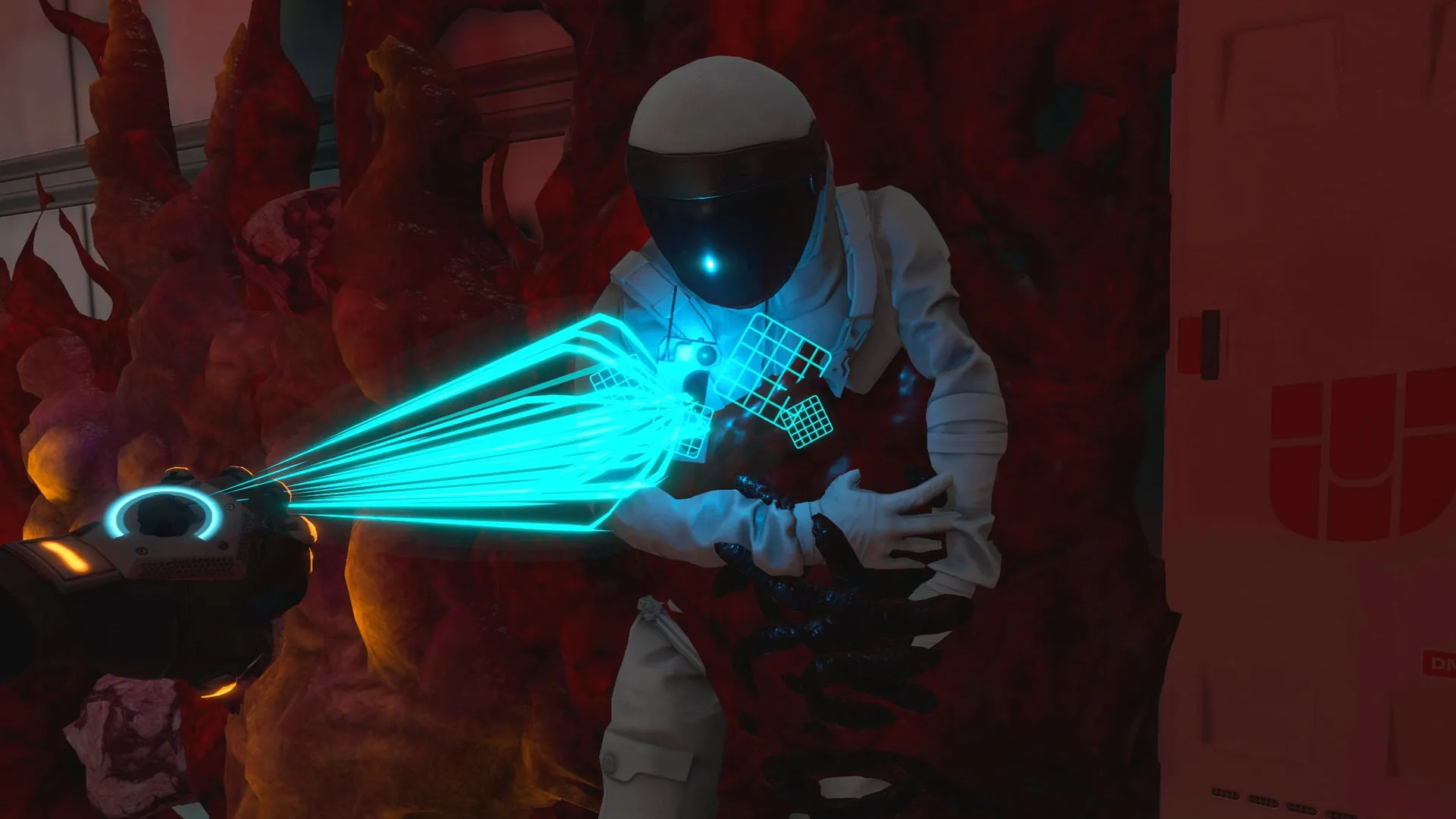
Tools you use with your hands. Alongside the guns, the player carries a set of tools in their backpack. A wire scanner traces hidden cabling through walls to the keypads and devices that need power. A decoder unfolds like an accordion between your two hands, and you tune it by turning two physical dials until your waveform matches the target. A bolt remover backs bolts out of panels, and a plasma cutter slices locks apart along the line you draw. The cutter only cuts if you keep it moving for long enough, so a cut has to be a deliberate stroke rather than a brush past.
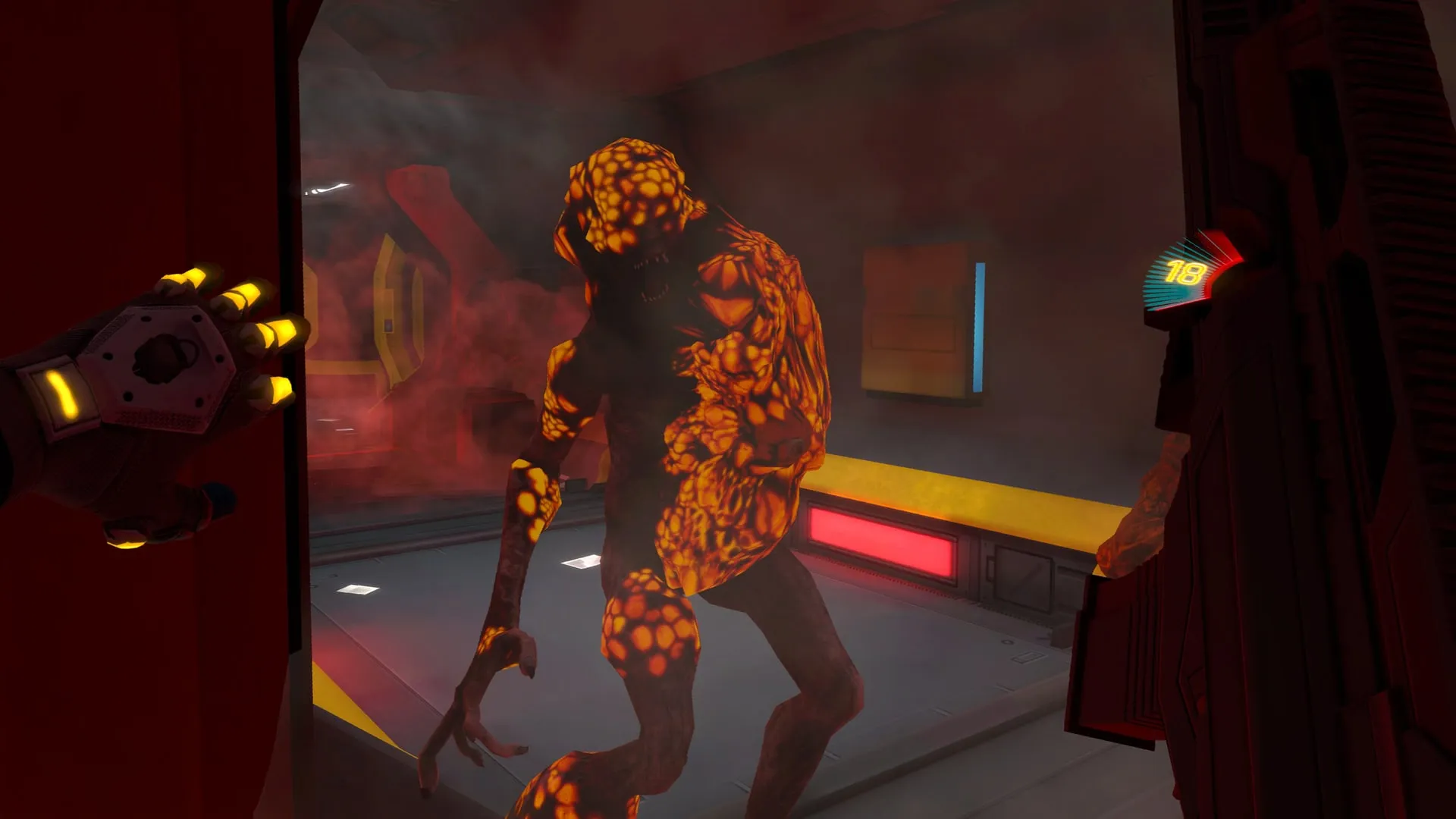
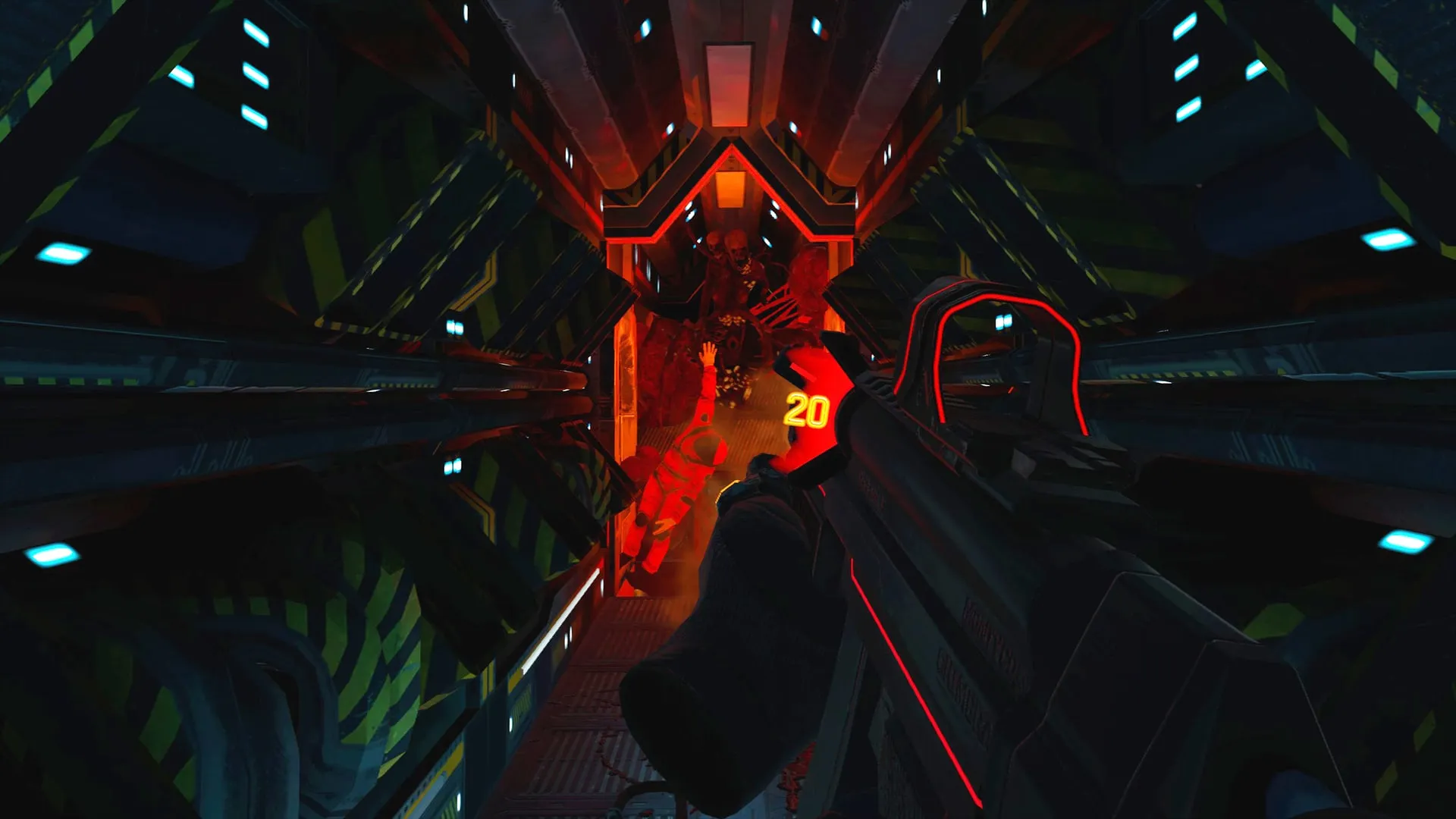
A wide cast of enemies. Apart from the bosses, the enemies are my work, and there’s a lot of variety among them. Soldiers take cover, lean out round corners to fire, blind-fire, reload behind cover, throw grenades and call out to each other. Infected enemies come in many forms: the main type can have its limbs shot off and grow them back mutated, others crawl, charge and pounce, spray acid from range, or rush the player and explode. They dodge shots that pass close to them, and enemies from different factions will turn on each other. Flying drones strafe and dodge, static turrets track the player, and one creature sits mounted on a floor, wall or ceiling, searching the space in front of it and leaning sideways to find a clear shot. Making that one look alive while it never moves took more creativity than any of its attacks.
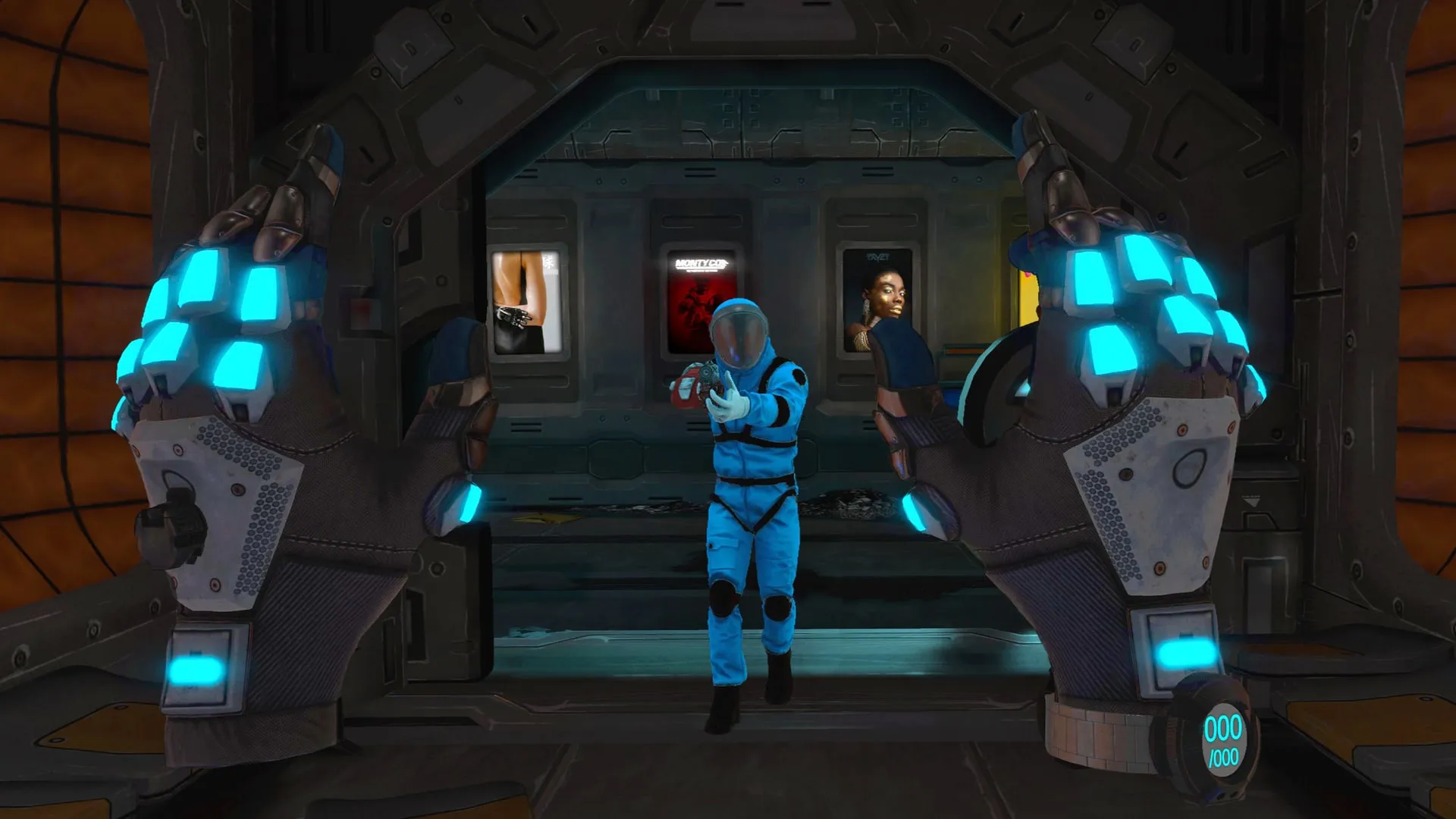
The backbone of the game. Most of my work sits underneath what the player sees. The game manager tracks the whole playthrough, from health and ammunition to unlocks, upgrades, collectibles and the story’s moral choices. Progression covers weapon and tool unlocks, suit upgrades, crafting and four difficulty levels that change which enemies appear in each scene, not just their numbers, with the hardest unlocked after finishing the game. Chapter select lets a player replay any part of the story they’ve reached, starting with a sensible loadout, and New Game Plus carries their unlocks into a fresh run.
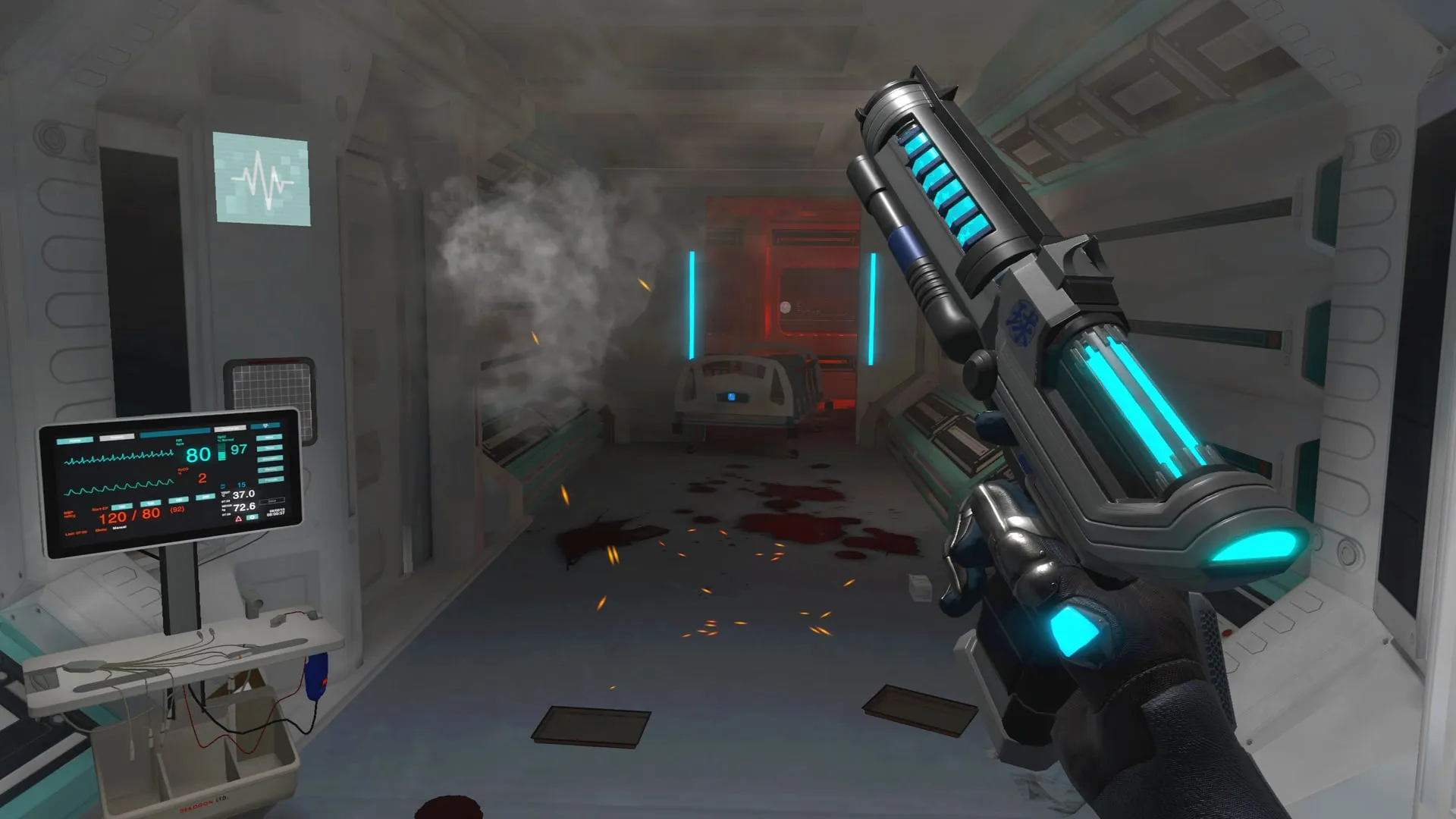
For the team, a debug scene select and a per-scene test setup let anyone open any of the 119 scenes and start with the right tools, weapons and ammunition, so testing a level didn’t depend on playing up to it, or on me.
The save system validates and repairs files instead of trusting them, keeps a backup while it loads, and tells the player honestly when something can’t be recovered. The main save format is version-tolerant, so a patch doesn’t invalidate saves from the build before. Restoring weapons was the awkward part: each gun is re-spawned, then its magazine, chambered rounds and action are driven back to where they were, step by step.
Accessibility. The game has a full left-handed mode, switched by a setting rather than a separate build, along with seated and standing play, snap and smooth turning, optional teleport, subtitles, colour-blind filters and automatic height recalibration when the play space drifts.
Technical detail
Unity 2022.3 LTS on URP, targeting Android for Quest, with separate renderer settings for Quest 2 and Quest 3. The VR layer is built on Hurricane VR and extends it rather than replacing it. One example: Unity doesn’t raise trigger-exit events when a player teleports out of a volume, so the teleporter tracks its own overlaps and sends the missing events itself. Standard enemies share one behaviour base under a central coordinator that ticks the whole population once a second, handling awareness, hearing and switching distant enemies off, and a small cover registry makes sure two enemies never take the same spot.
What I took from it
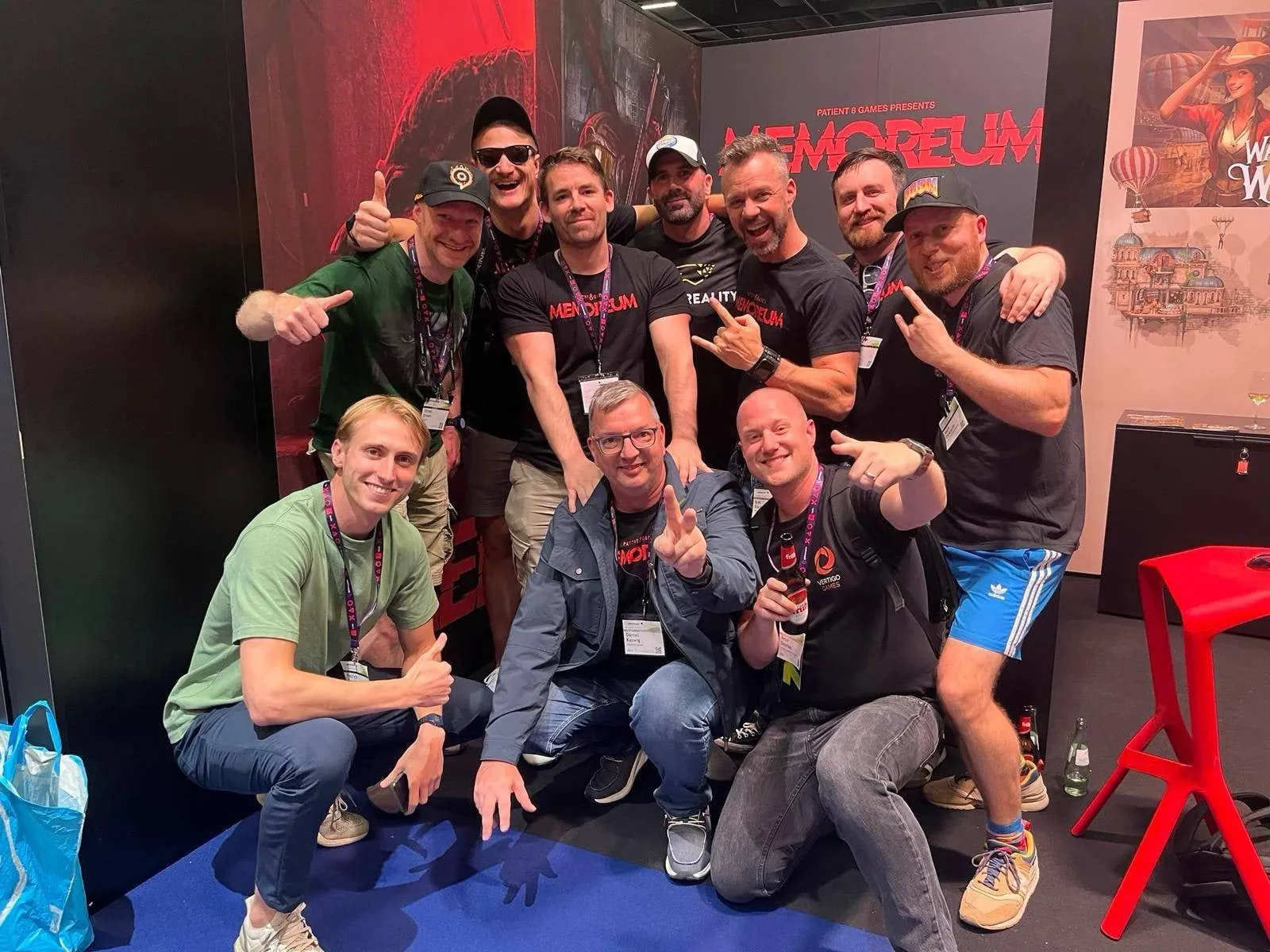
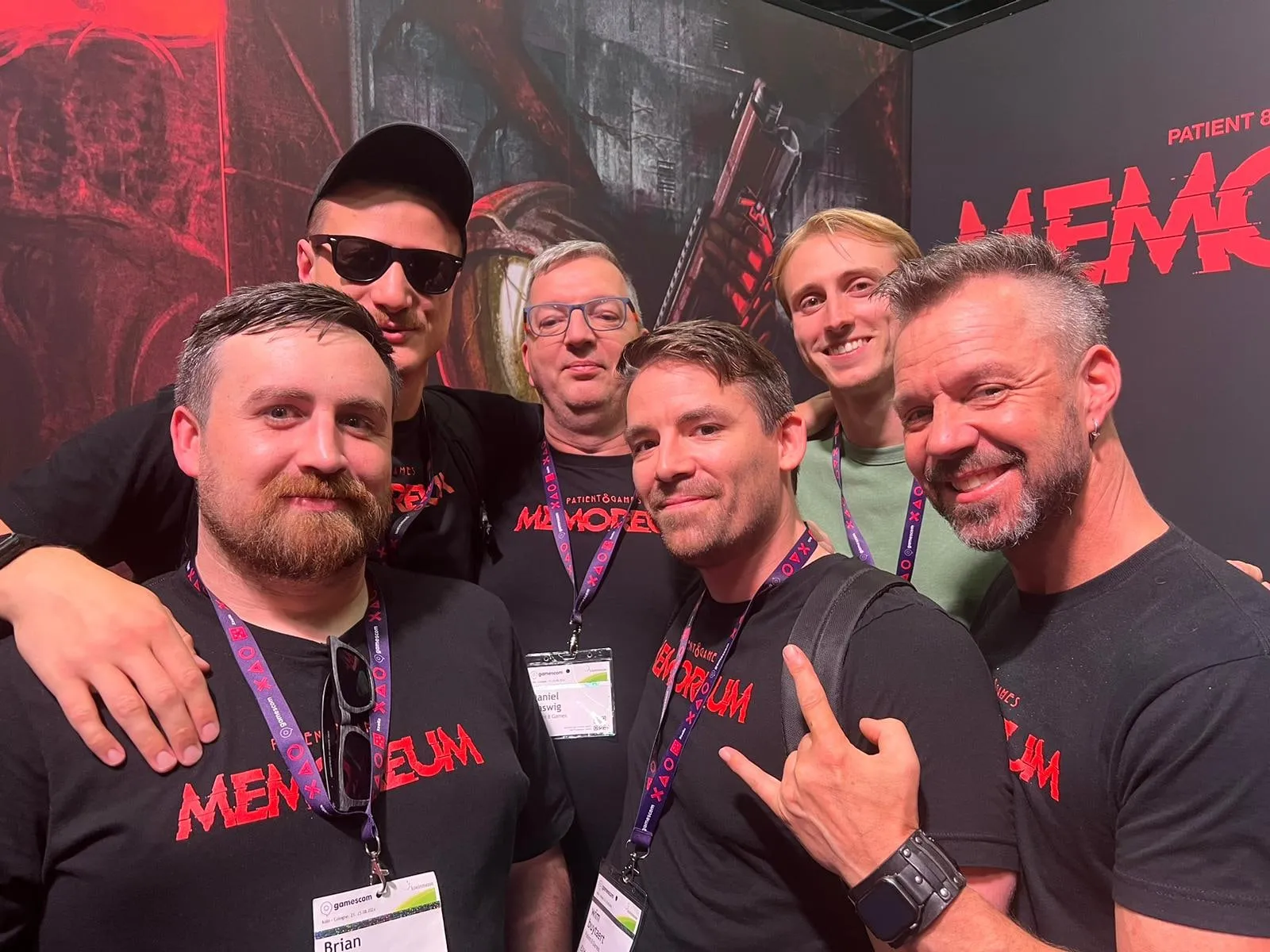
Memoreum ran for most of my professional working life so far, and a lot of my growth happened on it. Technically, it pushed my understanding of Unity across nearly every part of the engine. But the bigger lessons were about leading: running the technical side of a team, working day to day with people in audio, art, design, business and marketing, and learning how a commercial release cycle actually works, from platform submission to standing on a booth at Gamescom watching strangers play it.
It was a team effort. Our level designer built and tested the facility itself, all 119 scenes of it, and much of how the game plays comes from those spaces. Others on the team designed the cutscenes, built the audio and most of the boss fights, and modelled every creature in the game, and it’s better for each of them. What I carry forward is how to hold the technical side of a project like that together, and how to be the person the rest of a team can rely on to get it shipped.